Description
No description available yet.
Detailed description
Árpád Basch (1837–1909): Biography and Artistic Talents
Árpád Basch was a significant figure in 19th-century Hungarian painting, positioned between the Romantic and Realist movements. Born in 1837, his career spanned various artistic styles, from portraiture to historical and mythological themes. His art often focused on a deeper depiction of personal emotions, the soul, and societal issues.
Árpád Basch's artistic journey began at the Vienna Academy, and he later studied French painting in Paris, which greatly influenced his work. His art was characterized by a commitment to lifelike representation, delicate light and shadow effects, and extremely detailed textures. While he was particularly renowned for his portraits, he also depicted historical and religious themes and portrayed the emerging layers of society in his paintings.
His work encompassed a variety of genres: portraits, landscapes, genre scenes, and female nudes all played significant roles in his art. While he frequently employed the tools of realism, his work also often carried the emotional charge of Romanticism.
Árpád Basch and Woman Resting on a Sofa
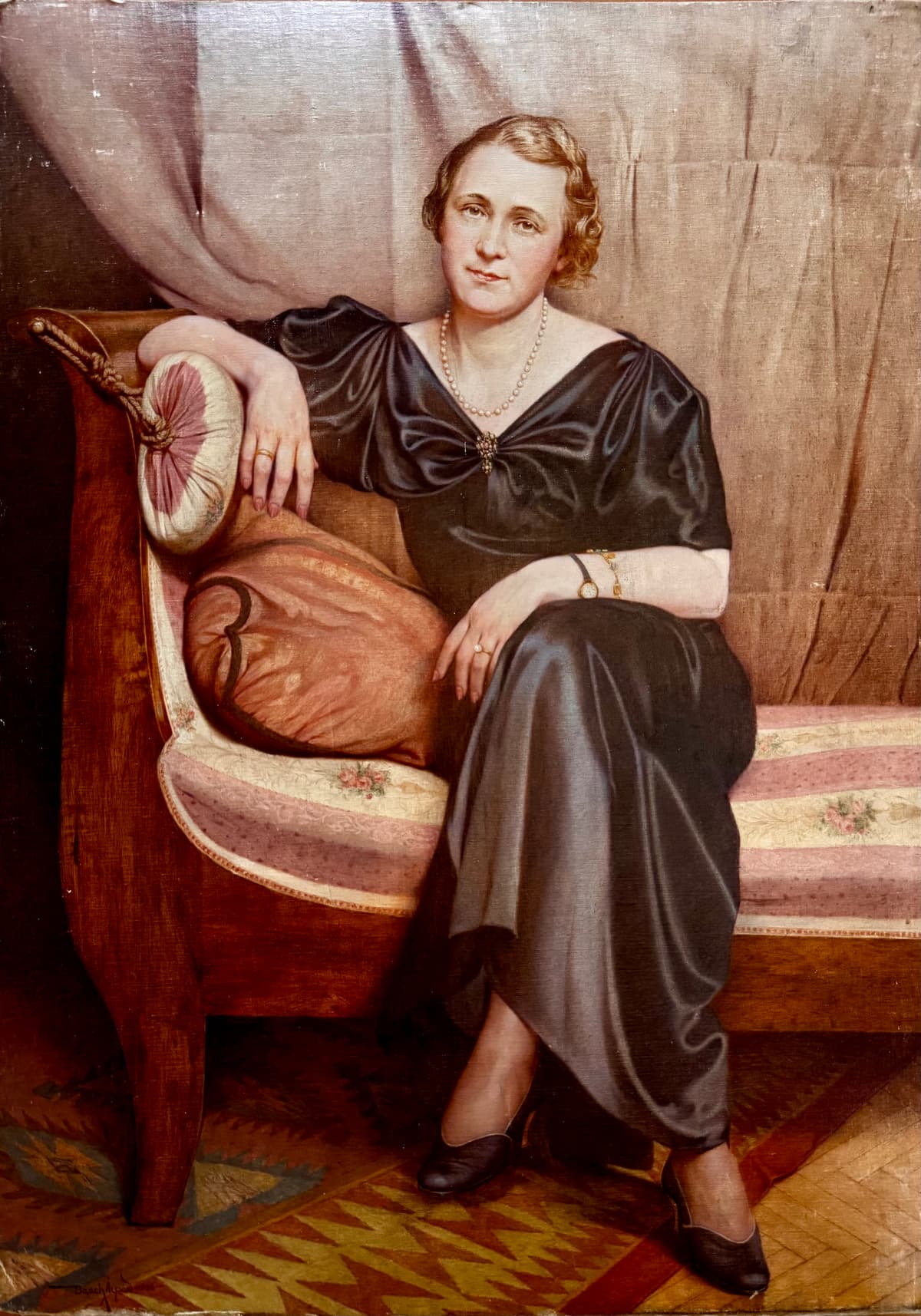
The Portrait of Mrs. Ignác Mautner is one of Árpád Basch’s finest and most well-known works. The painting portrays a young woman comfortably reclining on a sofa, shyly turning away from the viewer while enjoying a serene, dreamy moment. The artwork captures the intimate moment of the woman, balancing sensuality and the harmony of repose.
The central figure of the painting is not just a depiction of a female form but also an emotional and aesthetic experience rendered by the artist. The work is characterized by fine brushwork, soft and luminous shadows, and delicate textures. The woman's figure gently stands out from the background, dominated by soft pastel tones and the play of light. The elegance of the sofa and the posture of the woman are both emphasized by the bright yet warm color palette.
In this painting, Árpád Basch depicts the woman as a figure immersed in intimacy, drowsiness, or reflection. The painting does not only present a physical body but also conveys the emotional and spiritual calm of the subject, capturing a moment that radiates the elegance of sensuality and rest. In the genre of nude painting, the representation of the female body is common, but in Basch’s work, this depiction is not only aesthetically significant but also sensually and discreetly showcases the beauty of the female form.
The Portrait of Mrs. Ignác Mautner is thus a prime example of how 19th-century painters portrayed the female body and symbolic moments of the female soul. The painting holds not only aesthetic value but also conveys emotions and narratives to the viewer by blending Romantic and Realist traditions.
The Artistic and Historical Context of Portrait of Mrs. Ignác Mautner
Árpád Basch’s paintings, particularly the Portrait of Mrs. Ignác Mautner, reflect the social and artistic atmosphere of the late 19th century. In Hungary during this period, art situated between Romanticism and Realism often explored various societal layers, representations of the female body, and male-female relationships.
At that time, the depiction of women in art was not only a matter of aesthetics but also carried symbolic significance. Artists, including Árpád Basch, frequently used female figures as a means to express intimacy, delicacy, and emotion. In portraying the female body, they emphasized not only physical beauty but also its emotional and spiritual aspects.
In Basch’s art, the soft and sensual interplay of colors and forms, along with the subtle use of shadows, served as essential tools for portraying emotions and personality. The Portrait of Mrs. Ignác Mautner provides an aesthetic experience that combines the tranquility and sensuality of the female soul with the highest level of artistic techniques.
Conclusion
Árpád Basch’s artistry, particularly his Portrait of Mrs. Ignác Mautner, is a remarkable example of 19th-century Hungarian art, blending the sensitive emotional world of Romanticism with the intricate detailing of Realism. The painting portrays a female portrait that not only highlights physical beauty but also encapsulates the states of repose, intimacy, and emotional calm. By consciously choosing the female nude as an artistic subject, Basch illustrated ideals of femininity, sensitivity, and beauty. The Portrait of Mrs. Ignác Mautner remains one of Basch’s most renowned and acclaimed works, playing a significant role in his oeuvre and standing as a highlight of 19th-century Hungarian painting.