Description
No description available yet.
Detailed description
Introduction of the Painter
Rudolf Dudinszky (1871–) was a prominent figure in Hungarian painting, highly esteemed by Miklós Horthy. His work primarily focused on depicting nature, often highlighting the beauty of Hungarian landscapes and the simplicity of life close to nature. Dudinszky’s art is characterized by meticulous attention to detail and harmonious color palettes, creating a serene and contemplative atmosphere in his paintings. Influenced by Renoir, his works exude a timeless appreciation for the beauty of the natural world.
About the Artwork: Forest Retreat
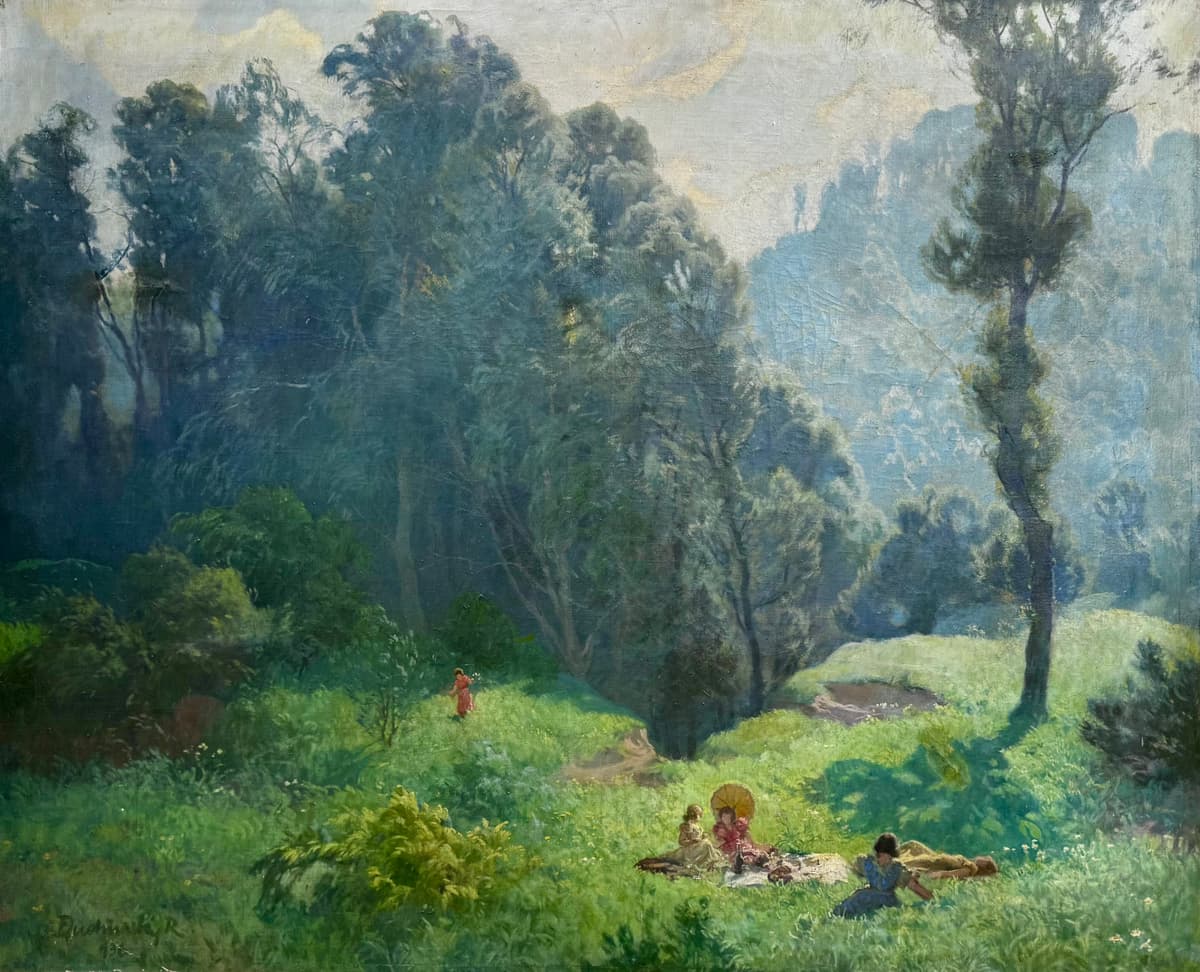
"Forest Retreat" portrays an idyllic scene set in a forest, reflecting on the beauty of nature and the human soul's yearning for peace and rest. At the heart of the painting is a figure or a small group, resting among the trees, enjoying the forest's tranquility. The interplay of light filtering through the canopy adds a magical atmosphere, while the rich detail underscores the artist's precision and sensitivity.
Artistic Features
Composition
The composition focuses on the natural interplay between light, shadow, and foliage, creating a dynamic yet soothing scene. The central figures, depicted with subtlety, blend seamlessly into their environment, emphasizing harmony between humanity and nature.
Light and Color
Dudinszky masterfully captures the dappled light filtering through the trees, employing a palette that highlights the forest's vibrant greens and warm earth tones. This technique enhances the painting’s depth and evokes a sense of immersion in the serene woodland setting.
Interpretation
"Forest Retreat" is more than a picturesque portrayal of nature; it is a celebration of the simple joys of life and the restorative power of natural surroundings. The artwork expresses Dudinszky’s deep respect and love for nature, as well as his belief in the harmony between humans and their environment.
Legacy and Influence
Supported and admired by Miklós Horthy, Dudinszky Rudolf’s paintings gained widespread recognition and played a significant role in promoting Hungarian art of the era. His works, including Forest Retreat, resonate with the ideals of simplicity, tranquility, and the profound connection between people and nature, leaving an enduring impression on Hungarian art history.