Description
No description available yet.
Detailed description
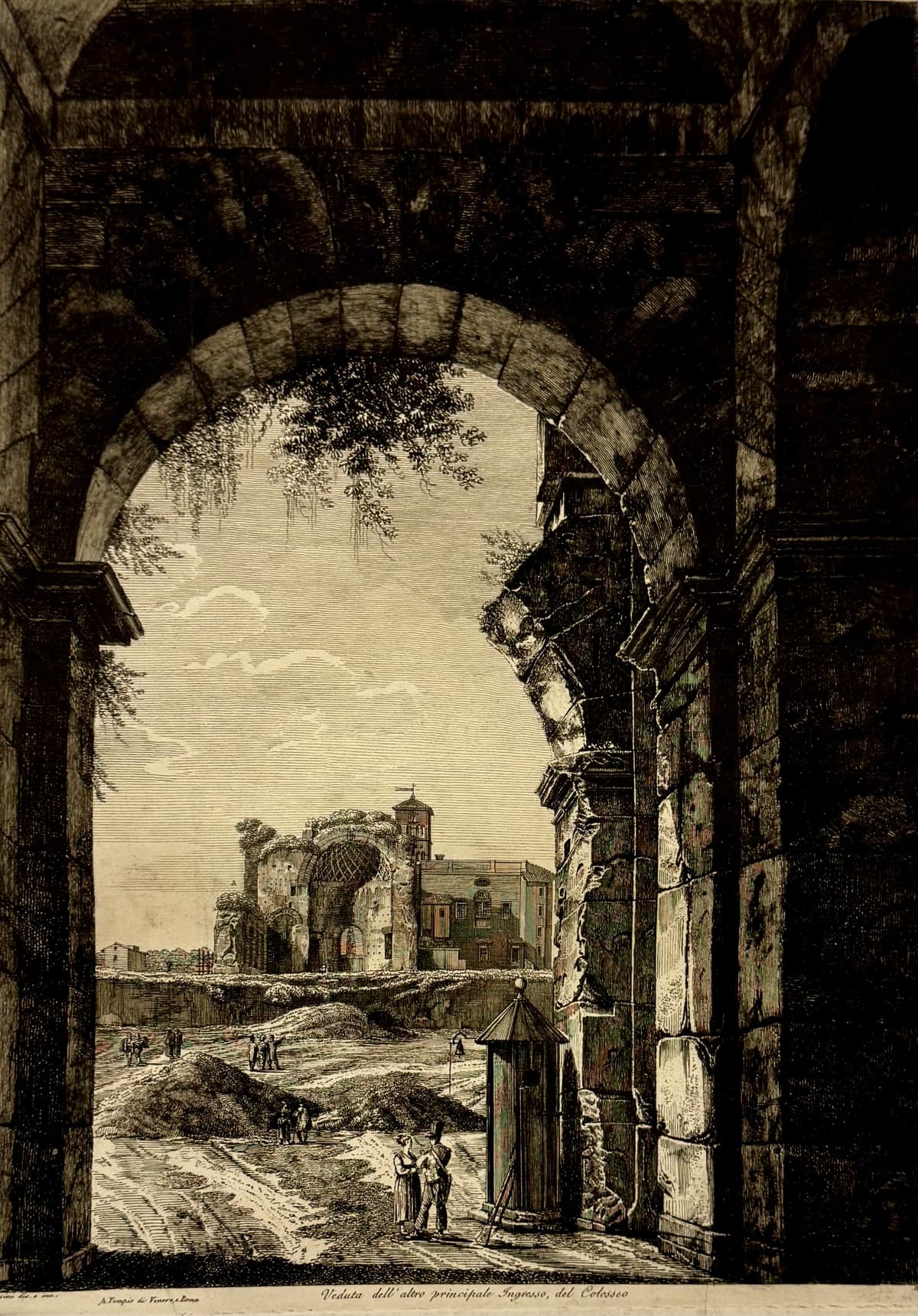
Luigi Rossini (1790–1857) depicted numerous aspects of the Colosseum in his art, emphasizing its architectural and historical magnificence. This etching showcases the main entrance of one of the world's most famous amphitheaters, which was a central symbol of ancient Rome. The building was constructed between 72 and 80 AD during the reign of Emperor Vespasian and his son, Emperor Titus, and served as one of the Roman Empire's most imposing structures.
The main entrance of the Colosseum was once a designated gate reserved for the emperor and high-ranking guests, revealing the grand spectacle of the inner space. Rossini depicts in detail the massive arches and the geometric harmony of the building, which are among the main characteristics of ancient Roman architecture.
The artist presents the dilapidated Colosseum with fine craftsmanship, while capturing the building's durability and monumental nature. The main entrance of the Colosseum was not only the gateway to ancient entertainment but also a symbol of the power and cultural significance of the Roman people.
Rossini's work simultaneously documents and romanticizes the Colosseum, immortalizing its architectural beauty and historical importance. The creation draws attention to the glory of the past and the necessity of preserving cultural heritage.