Description
No description available yet.
Detailed description
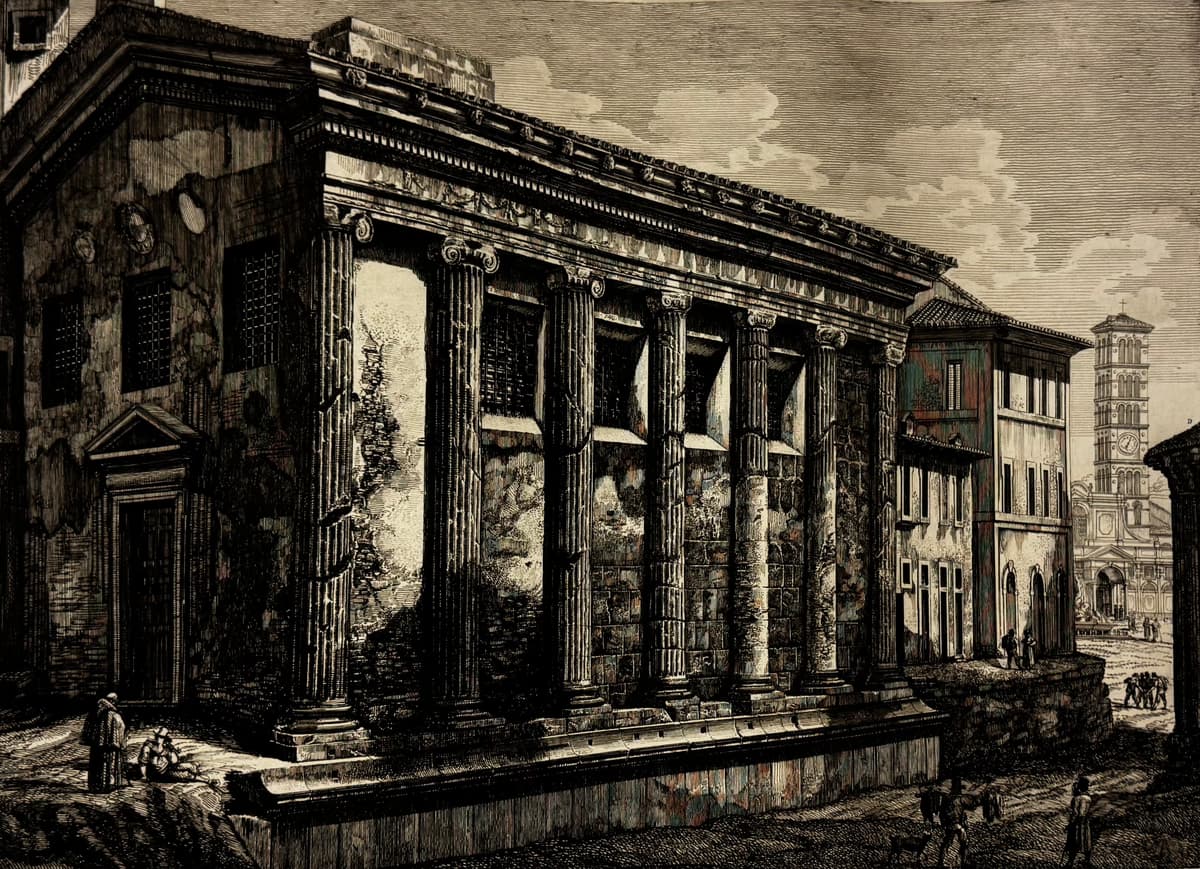
Luigi Rossini (1790–1857) often depicted the ancient and medieval architectural monuments of Rome, showing them as they transformed over time. The Temple of Fortuna Virilis (Templum Fortunae Virilis), also known as the Temple of Portunus, is one of the best-preserved temples of ancient Rome, built in the 1st century BC. The building honored the goddess, or Portunus, the protector of harbors and rivers.
In the Middle Ages, the temple was transformed and used as a Christian chapel, later becoming known as Santa Maria Egiziaca, which the local community claimed as its own. Rossini's work pays special attention to the temple's classical columns, which were partly integrated into modern masonry, thus showcasing the meeting of ancient and more recent eras.
This engraving reflects the architectural stratification of Rome, in which the heritage of antiquity is organically integrated into the architectural solutions of later centuries. Rossini's work not only emphasizes the beauty and historical significance of the temple but also encourages the continuous preservation and interpretation of monuments.