Description
No description available yet.
Detailed description
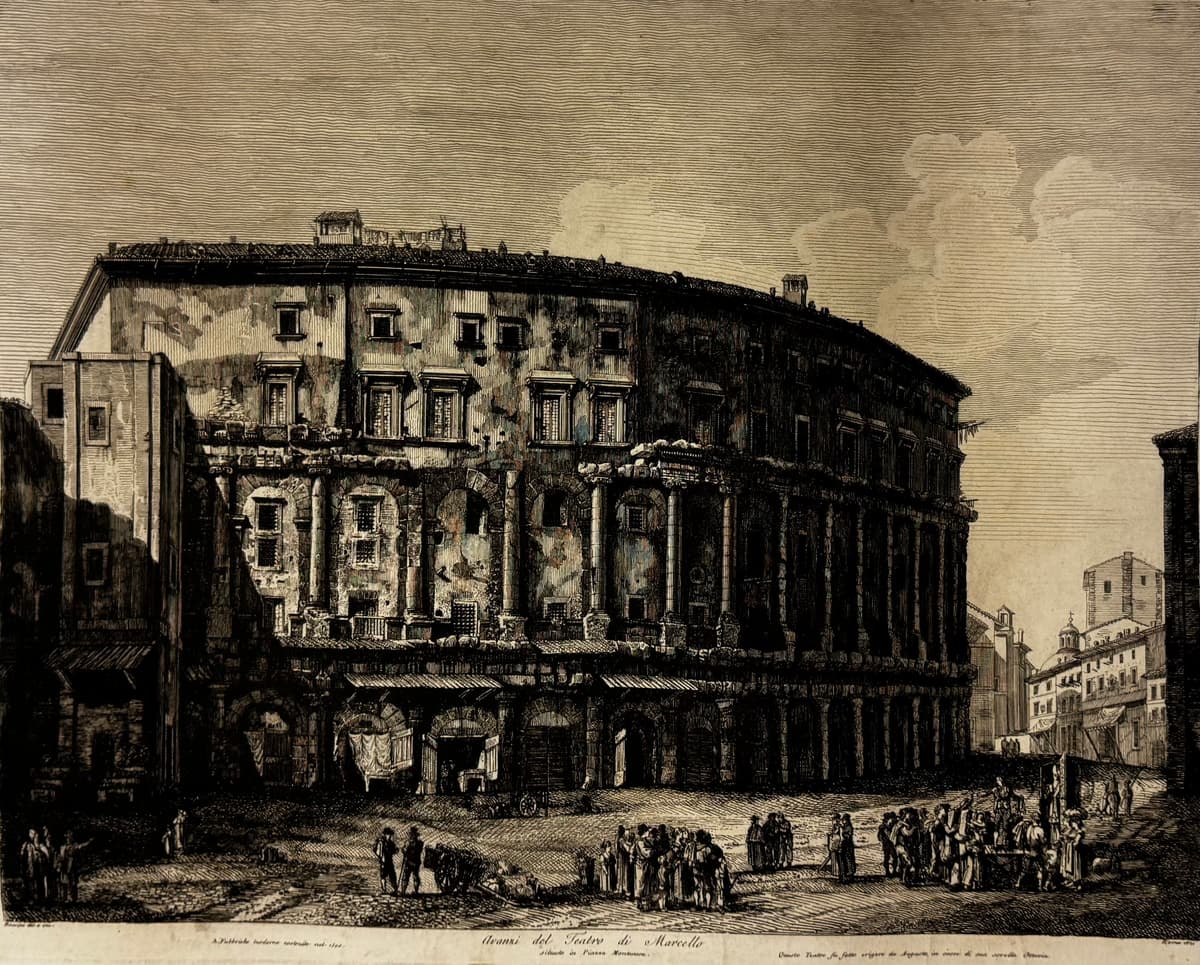
Luigi Rossini (1790–1857) engravings are outstanding documents of the architectural heritage of ancient Rome. The Marcellus Theater (Theatrum Marcelli), which was completed by Emperor Augustus in 13 BC, is named after Augustus' nephew and heir, Marcellus. The building was one of the largest theaters in ancient Rome, capable of accommodating up to 20,000 spectators.
Rossini's work depicts the remaining ruins of the theater, reflecting the classical elements of Roman architecture, such as the arched façade and the semi-circular structure of the theater. Throughout the Middle Ages, the theater was transformed into residential buildings, which can still be seen, partly incorporated, to this day.
This engraving illustrates the organic connection between ancient and medieval Rome, emphasizing the cultural and historical significance of the Marcellus Theater. Rossini's art not only preserves architectural details but also captures the imprint of the passage of time and the process of repurposing. The work immortalizes the former splendor of ancient Rome and the city's continuous transformation.