Description
No description available yet.
Detailed description
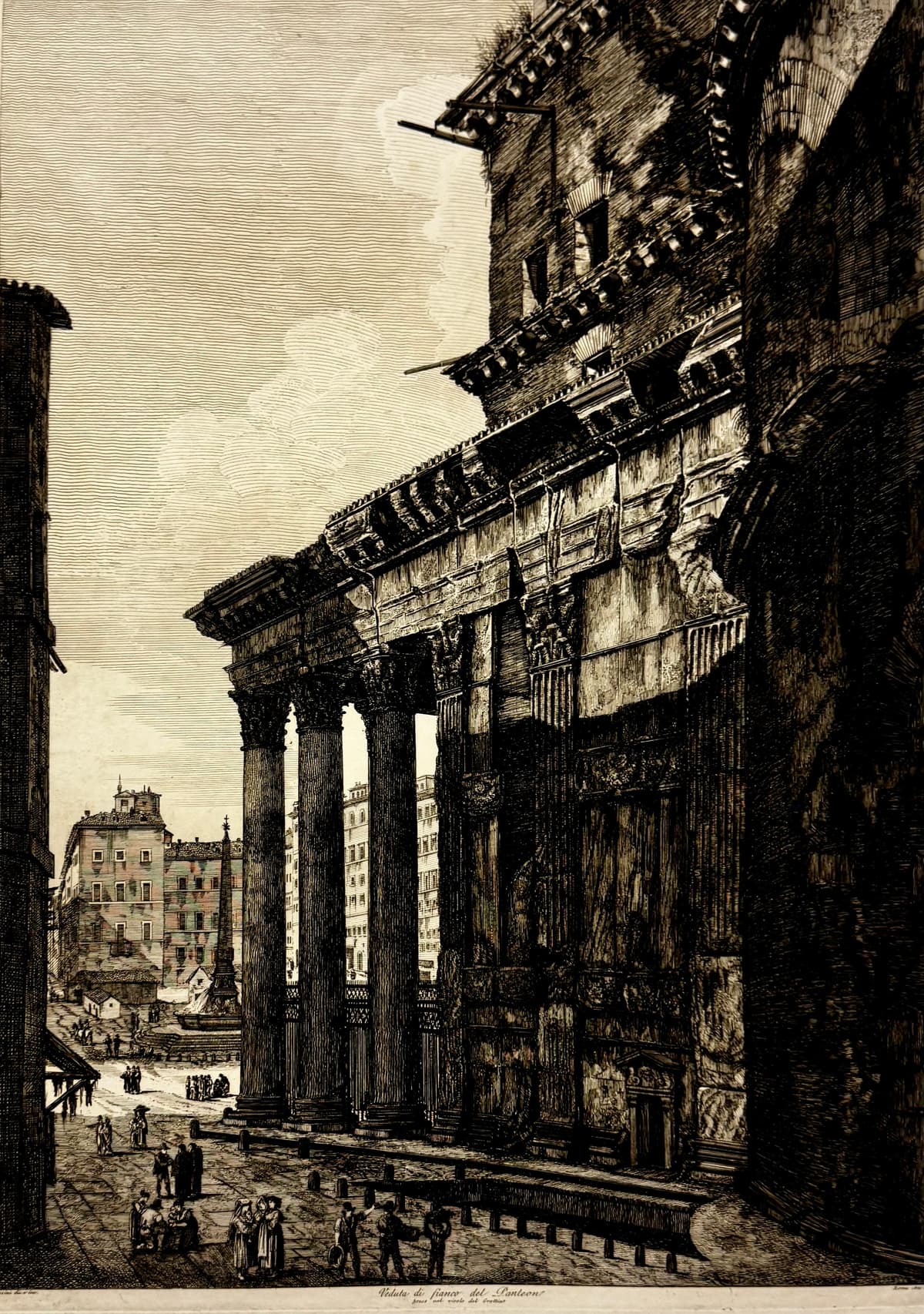
Luigi Rossini (1790–1857) depicted the most famous relics of Roman antiquity, including the Pantheon, which is one of the greatest wonders of ancient architecture. The Pantheon, originally built by Marcus Agrippa in 27 B.C., attained its present form during the reign of Emperor Hadrian (A.D. 118–125). The name of the building (“Temple of all gods”) comes from the Greek words “pan” (all) and “theos” (god).
Rossini's engraving portrays the less well-known side view of the Pantheon, highlighting the building's massive cylindrical structure and the geometric rhythm of the arches supporting the walls. The engraving also features the Roman environment, as part of the urban fabric that developed around the Pantheon, almost merging with the building over the centuries.
The uniqueness of the Pantheon lies in its massive dome, which is one of the largest architectural achievements in the world and continues to inspire architects even after more than 2000 years. Rossini's work not only highlights the architectural details of the building but also immortalizes its timeless monumentality and harmony. The Pantheon still stands today and is one of the most recognized symbols of Roman cultural heritage. Rossini's engraving presents it as an impressive monument to the glory of ancient Rome.