Description
No description available yet.
Detailed description
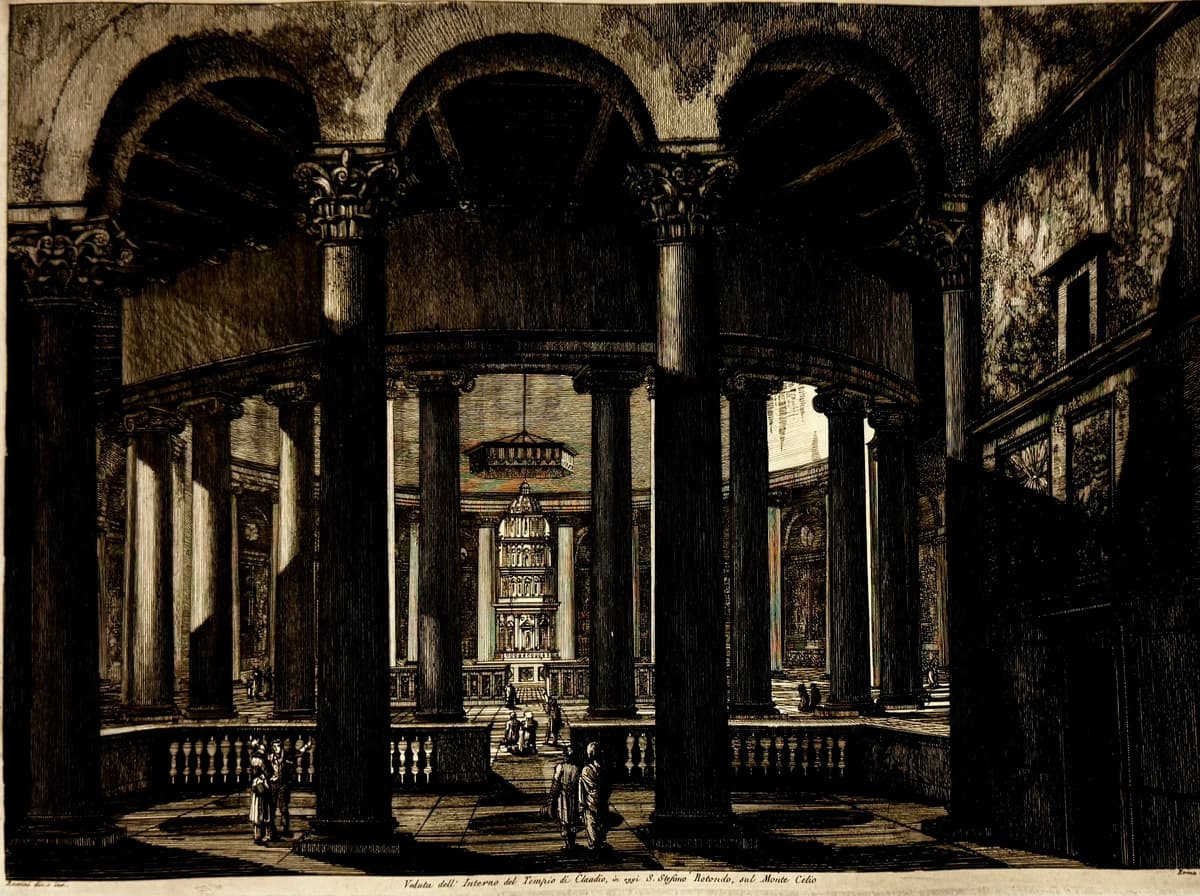
Luigi Rossini (1790–1857) eagerly captured the ruins of the temples of ancient Rome and their transformations in the following centuries. The temple of Emperor Claudius (Templum Claudii) was originally built between A.D. 54 and 68 on the Caelian Hill, on the orders of Emperor Nero, to honor the deified Claudius, the ruler who achieved apotheosis.
In the later centuries, the temple was transformed into a Christian church and is now known as the Saint Stephen Rotunda (San Stefano Rotondo). This round temple is one of the oldest circular plan Christian buildings in Rome, constructed in the 5th century on the ruins of the temple. Rossini’s etching emphasizes the monumentality of the interior space and its historical layering, paying special attention to the classical columns and the transformations depicted through the simplicity of early Christian architecture.
This depiction not only reveals the ancient and Christian past of the building but also the sensitivity of the artist in presenting the ruins in a form that is comprehensible and aesthetically enjoyable for today’s viewer. The Saint Stephen Rotunda is still accessible today and is a unique example of how the heritage of ancient Rome continues in Christian culture. Rossini's work highlights the connection between the past and the present, reminding us of the value of historical continuity.