Description
No description available yet.
Detailed description
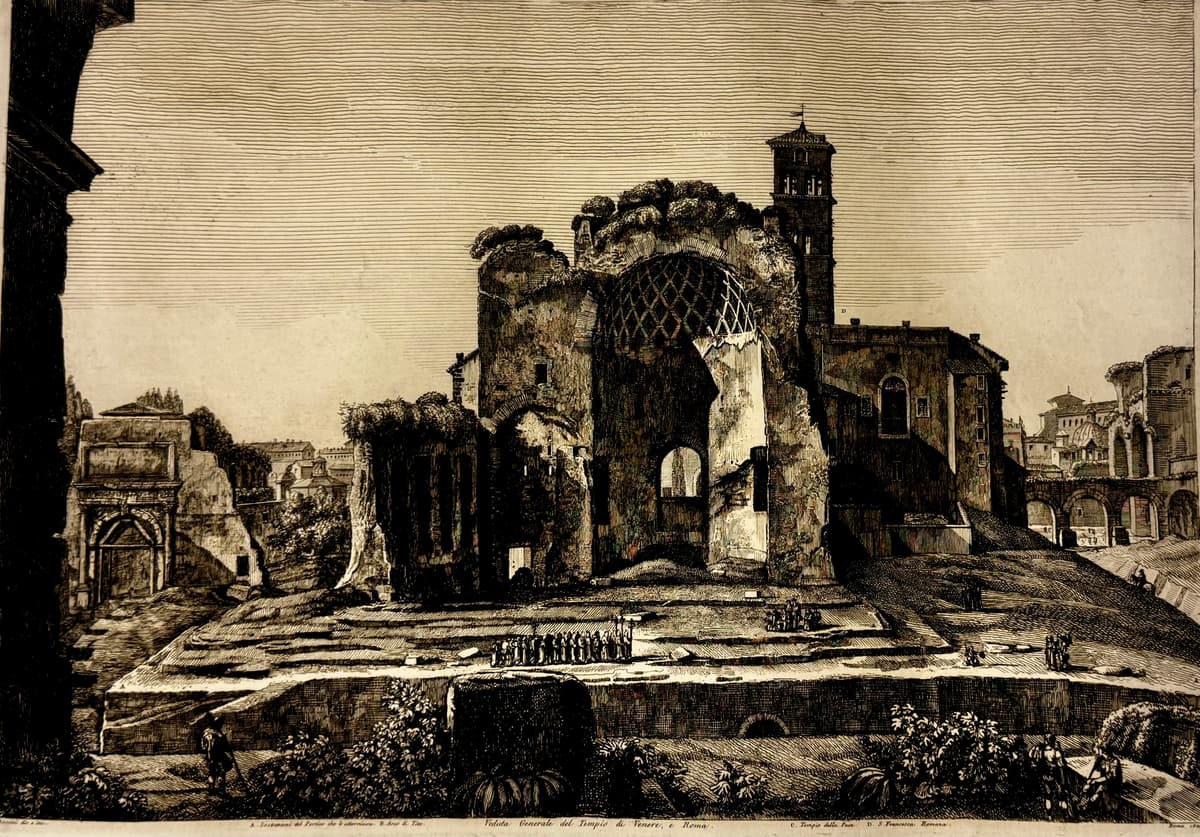
Luigi Rossini (1790–1857) immortalized the greatest architectural works of Roman antiquity, including the Temple of Venus and Rome, which was the largest temple of the Roman Forum. The building was designed and constructed by Emperor Hadrian between AD 121 and 141. The temple was built in honor of Venus Felix, the goddess of love and fertility, as well as Roma Aeterna, the personification of the eternal city.
The temple's double symmetry made it unique: its two sanctuaries were placed back to back, with each dedicated to a different deity. With its grand columns and massive open spaces, the temple reflected the monumentality and aesthetic sophistication of Roman architecture.
Rossini's etching presents a general view of the ruins, highlighting the monumentality of the building's remains and the surrounding landscape. The detailed depiction emphasizes the beauty of the columns, arches, and the remaining structural elements. The Colosseum may also appear in the background, located near the temple, further reinforcing the dramatic context of Roman architectural heritage.
This work not only evokes the glory of the ancient world but also reminds us of the intertwining of religious and urbanistic aspects of Roman culture. Rossini's work presents the Temple of Venus and Rome as one of the impressive examples of the pinnacle of Roman architecture, emphasizing its cultural and historical significance.