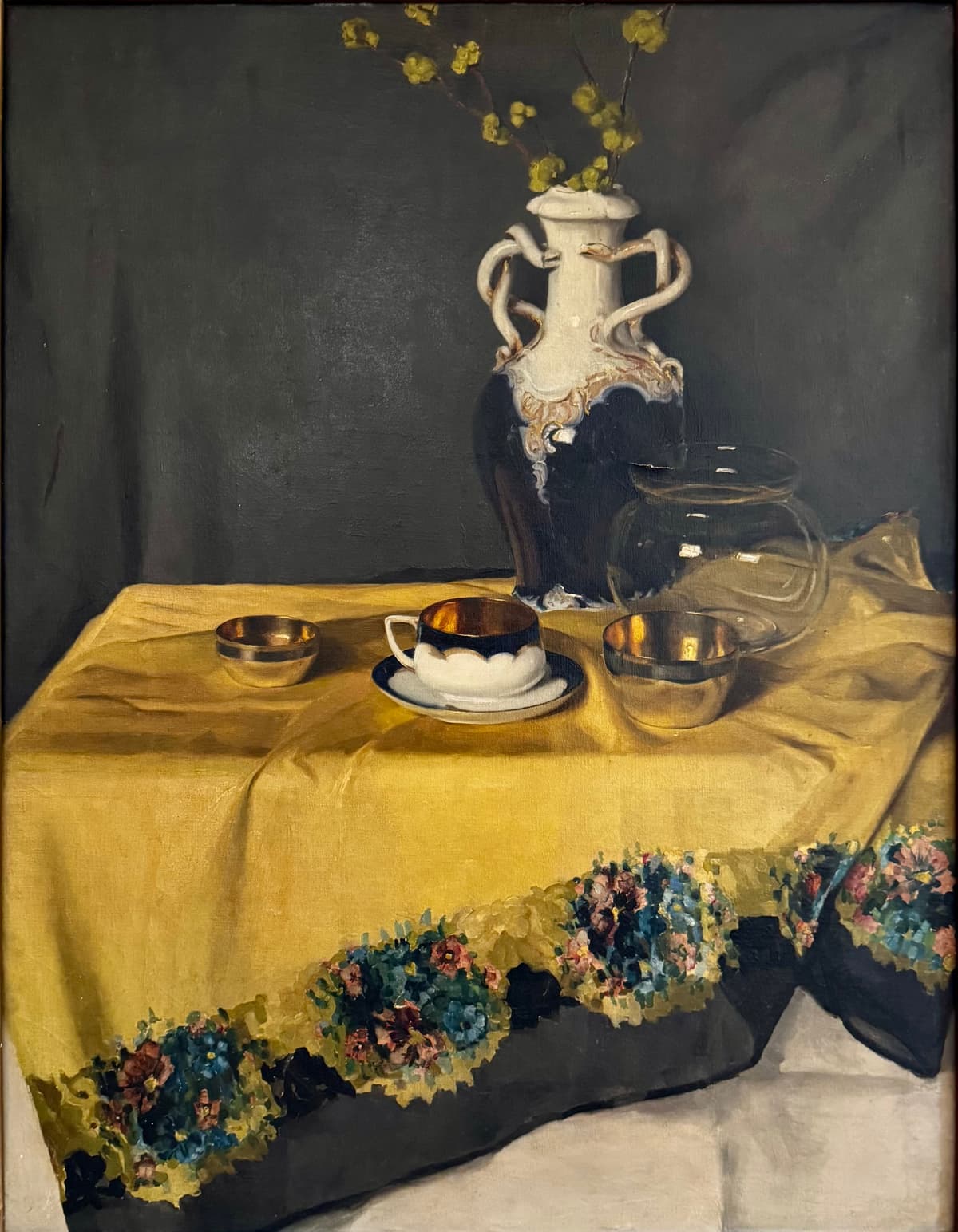
Description
No description available yet.
Curators

Ács Érmes Károly
curator
ermesprojekt@gmail.com

Ohnhaus Éva
curator
eva.artdeco@gmail.com
Detailed description
János Pentelei Molnár (1878–1924) – Master of Hungarian Art Nouveau and Historicism
Life and Career
János Pentelei Molnár was born on May 11, 1878, in Dunapentele (present-day Dunaújváros, Hungary). His artistic talent became evident at an early age, leading him to study at the Budapest School of Decorative Arts. He later continued his education in Munich and Paris, where he was influenced by the artistic movements of the late 19th and early 20th centuries. His work reflects a blend of Art Nouveau and historicist styles, both of which were prominent in Hungary during his time.
Artistic Style and Influence
Pentelei Molnár’s paintings are a remarkable representation of Hungarian turn-of-the-century art. His style was heavily influenced by the Munich school of academic realism, yet it also incorporated elements of both the Viennese and Hungarian Art Nouveau movements. His works are known for their exquisite detailing, vibrant use of color, and themes drawn from history, mythology, and everyday life.
He frequently painted genre scenes, historical compositions, and still lifes. Some of his most notable works include:
Lady with a Fan
In the Courtyard of a Knight's Castle
Still Life with Flowers
His paintings often exhibit a refined elegance and meticulous composition, catering to the tastes of the bourgeois society of his time.
Legacy and Significance
Despite his relatively short life—he passed away in 1924 at the age of 46—Pentelei Molnár’s work remains an important part of Hungarian art history. His paintings are still highly sought after by collectors and frequently appear at auctions.
Although he may not be as widely recognized as some of his contemporaries, his paintings stand out for their sophistication and intricate details, securing him a respected place in Hungarian visual arts.