Lot details
Martinot á Paris
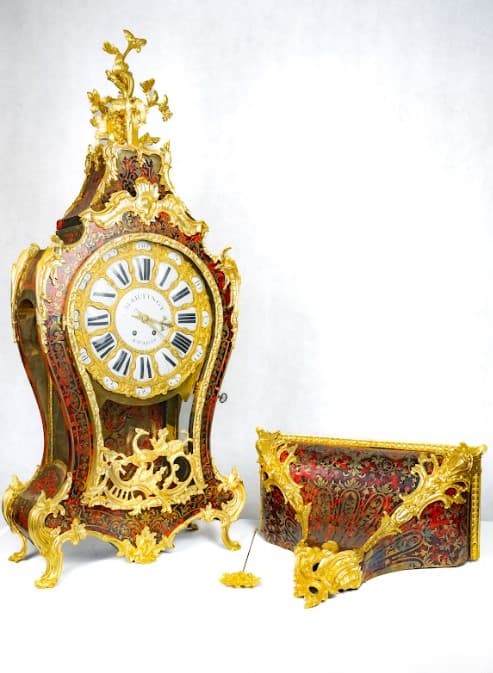
#24French red boulle cartell clock 19th century peacock and acchantus design Martinot á Paris
Curators

Ohnhaus Éva
curator
eva.artdeco@gmail.com
Detailed description
The Boulle technique is a classic French marquetry method developed by André-Charles Boulle (1642–1732) that decorates wooden furniture and clocks with fine metal threads, usually made of bronze and copper materials. The burgundy color often covers a rich mahogany or oak base, creating an elegant contrast with the metal inlays. The acanthus motif originates from ancient and Renaissance art, adorning objects with its plant tendrils, while the peacock symbolizes beauty and pride. The inscription 'Martinot à Paris' refers to a well-known 19th-century Parisian watchmaker or workshop that played a significant role in the production of luxury watches. These clocks often represented the contemporary French luxury and artistic sophistication. In 19th-century watchmaking, the Boulle technique and rich embellishments were particularly fashionable during the Napoléon III era. The Martinot workshop became known for its fine craftsmanship and quality mechanics. These wall clocks are still valuable collector's pieces today, exemplifying one of the great examples of French decorative art. The complexity inherent in style and technique reflects a high level of craftsmanship and aesthetics.