Description
No description available yet.
Detailed description
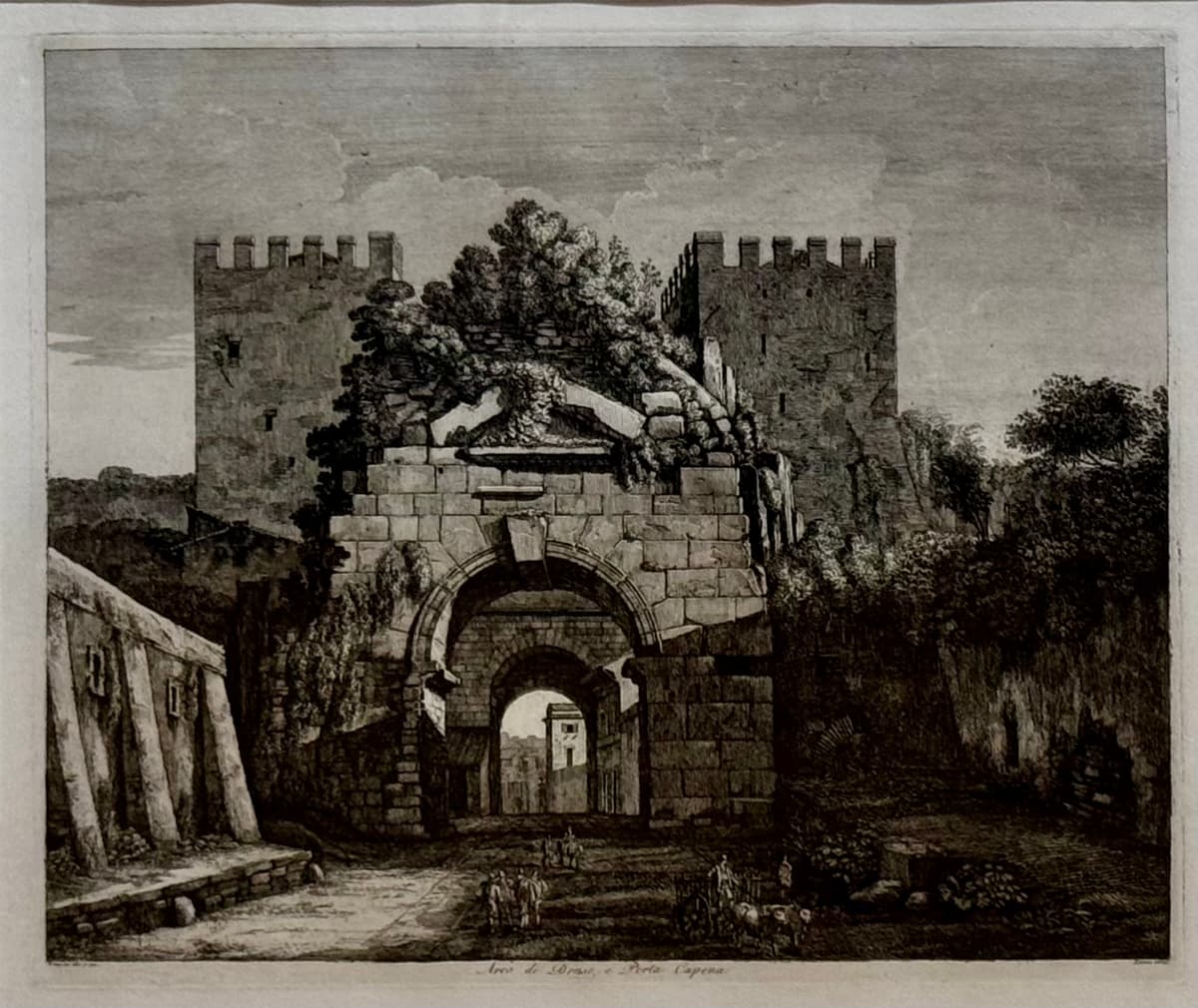
Luigi Rossini (1790–1857) loved to immortalize the emblematic sites of ancient Rome, including the Arch of Drusus and the famous Porta Capena. These structures reflect two different but complementary slices of ancient Rome’s history.
The Arch of Drusus was probably built in the 3rd century AD and was part of the famous Aqua Antoniniana aqueduct. The arch served as a decorative engineering structure that simultaneously fulfilled the aqueduct’s water conduit function and stood as a tribute to Drusus.
The Porta Capena, one of Rome's legendary gates, was located at the beginning of the Via Appia. This gate was not only of military significance but also functioned as a cultural symbol, as it was the entrance to the city for travelers coming from the southern territories, including victorious commanders and merchants.
Rossini's engraving depicts the surroundings of the arch and the gate, highlighting the monuments' grandeur and the romantic mood of the landscape. The work accurately documents the architectural details, such as the columns and the vaults, while conveying the elegance of Roman architecture.
This creation not only showcases the beauty of the structures but also their historical significance. Thanks to Rossini's work, the Arch of Drusus and the Porta Capena will forever remain in the rich treasury of memories of ancient Rome.