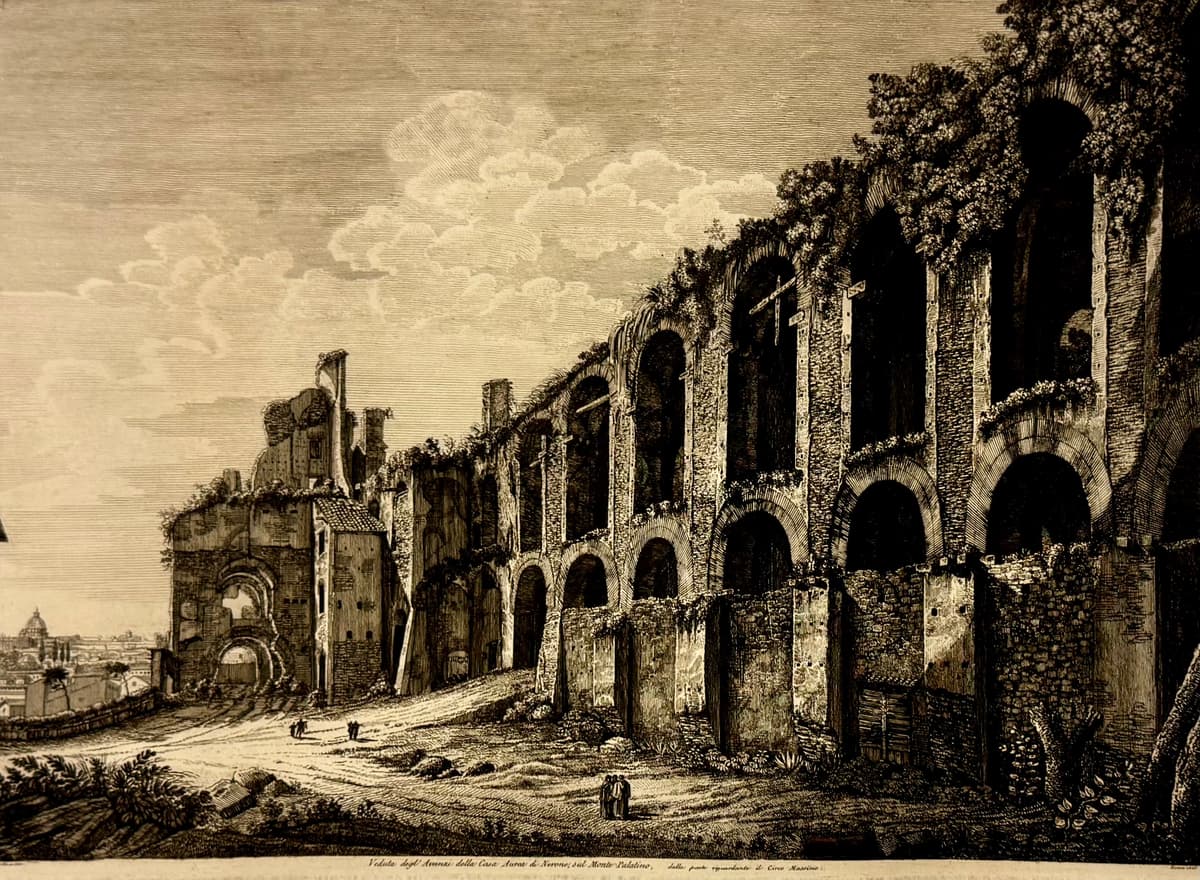
Description
No description available yet.
Curators

Ács Érmes Károly
curator
ermesprojekt@gmail.com
Detailed description
Luigi Rossini: Friend of Ancient Architecture
Luigi Rossini (1790–1857) was one of the outstanding Italian engravers and graphic artists whose name is closely linked to the preservation of ancient architectural monuments in Rome and Pompeii. In his works, scientific accuracy and a romantic tone harmoniously unite, making him a defining artist of his time.
Early Life and Education: Rossini was born near Ravenna and learned the basics of engraving at the academy in Fiuggi. At a young age, he moved to Rome, where, continuing the tradition established by Piranesi, he studied ancient ruins and their layout in depth.
Career and Style: Rossini's specialty lay in the fact that he did not merely create archaeological documentation: through his dark tones and fine shading, he bestowed a fabulous, timeless atmosphere upon the ruins. His engravings and aquatints showcase the monumentality and richness of detail of the buildings by exploiting the contrast of light and shadow.
Major Works: • Le Antichità Romane illustrate (1825–1830): 100 engravings of the remains of the Forum Romanum, the Colosseum, and the Pantheon. • Les Ruines de Pompéi (1832): colored aquatints featuring frescoes and temples from Pompeian villas. • L’Italia antica (1845): a compiled volume showcasing Italy's most important archaeological sites.
Legacy: Rossini's works not only provide historical documentation but also offer an aesthetic experience. His influence is still felt in the world of architectural graphics and archaeological illustrations, and his oeuvre contributed to the emergence of the ancient cult of the 19th century.